
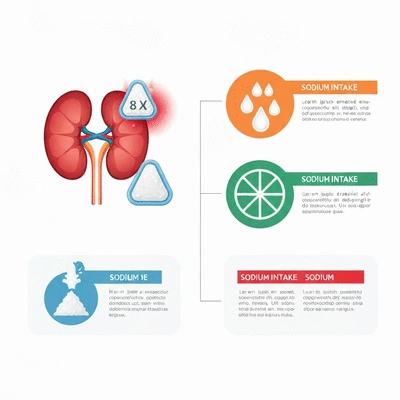
Sodium Intake Recommendations
Target daily sodium levels for different groups:
- ✓Adults: < 2,300 mg/day
- ✓Hypertension/Risk: 1,500 mg/day
- ✓Children: Varies by age (pediatrician)
- ✓Elderly: Often lower for BP management
Aug 15
Did you know that reducing your sodium intake can significantly lower your blood pressure? Understanding the role sodium plays in heart health is crucial for making informed dietary choices that can enhance your overall wellness.
Understanding safe sodium levels and potassium's balancing role is crucial for blood pressure and overall heart health. The following visual summarizes key recommendations and the effects of sodium on various aspects of health. For more detailed information on maintaining a healthy heart, consider exploring heart disease prevention lifestyle changes.
Target daily sodium levels for different groups:
Beyond blood pressure, excess sodium affects:
Key potassium sources to counteract sodium:
Steps to take control of your sodium intake:
Understanding how sodium impacts our health, especially blood pressure, is essential for everyone. Sodium is a mineral found in many foods and is crucial for maintaining fluid balance and proper muscle function. However, many of us may not realize the significant role it plays in blood pressure regulation. Let's explore why sodium matters for our health!
When we consume sodium, it draws water into our bloodstream, increasing blood volume, which can lead to elevated blood pressure. This is why keeping track of sodium intake is vital for maintaining heart health, especially for those at risk of hypertension.
Sodium is an essential nutrient, but it's important to consume it in moderation. Most people get more sodium than they need, primarily from processed foods. This excess can cause major issues for our blood pressure. For instance, high sodium consumption is linked to hypertension, which can increase the risk of heart disease and stroke. To further understand how diet impacts health, consider understanding macronutrients.
Realizing the balance between sodium intake and health is crucial. Many people might not think about how their daily choices affect their sodium levels. By keeping sodium within recommended limits, we can reduce our risk of hypertension and improve our overall health.
Research shows a clear link between high sodium intake and hypertension. For individuals diagnosed with high blood pressure, reducing sodium can lead to significant health improvements. Studies suggest that even a small decrease in sodium intake can lower blood pressure levels and contribute to better heart health.
As the owner of Fairfax Fitness, I emphasize the importance of understanding these connections. Making informed choices about sodium not only supports heart health but also empowers you to take control of your wellness journey.
Potassium plays a vital role in managing sodium levels in our body. It helps counteract the effects of sodium and promotes healthy blood pressure. A diet rich in potassium can help balance sodium intake and reduce the risk of hypertension.
Incorporating potassium-rich foods is an excellent strategy for maintaining a healthy balance. Whenever I coach clients at Fairfax Fitness, I often recommend focusing on these wholesome foods to boost both sodium balance and overall health.
How do you currently manage your sodium intake? Share your thoughts and strategies below:
At Fairfax Fitness, we understand how overwhelming it can be to navigate the world of nutrition, especially when it comes to sodium intake. Let's simplify it! Keeping track of your sodium levels is vital for managing blood pressure and overall health. Here are the key takeaways regarding safe sodium levels for different populations:
By keeping these recommendations in mind, you can take significant steps towards better health. Remember, being proactive about your sodium intake can empower you to make healthier choices daily!
Sodium plays a nuanced role in our health, affecting not just blood pressure but also weight management and the prevention of chronic diseases. Excessive sodium can lead to water retention, which might mask true body weight and complicate efforts to lose weight. In addition, high sodium consumption is linked to various health issues, including:
By maintaining a balanced sodium intake, you're not just promoting better blood pressure control, but also supporting your body's ability to thrive in the long run. This holistic approach is something I encourage my clients at Fairfax Fitness to adopt, alongside strategies for mindset matters in weight loss.
Taking control of your sodium intake can feel daunting, but creating a personalized sodium plan can help ease that burden! Start by assessing your current dietary habits; this will give you a clear picture of where you might be overindulging in sodium. Consider these steps:
With this actionable plan, you’ll feel more empowered to take your health into your own hands!
Here are some frequently asked questions about sodium intake and its impact on blood pressure:
To further support your health journey, I recommend utilizing a variety of resources. Here are some that you might find helpful:
These resources can provide ongoing education and support as you navigate your dietary choices.
Finally, one of the most critical aspects of managing your sodium intake is monitoring your blood pressure regularly. This allows you to see how dietary changes impact your health. Aim to check your blood pressure at least once a month. Here are a few tips for effective monitoring:
By keeping a close eye on your blood pressure, you'll be better equipped to make informed decisions regarding your health, paving the way for a longer, healthier life! For additional strategies to maintain optimal health, consider exploring natural ways to lower blood pressure.
Here is a quick recap of the important points discussed in the article:
I'm Jordan H. Emerson, a dedicated health and fitness enthusiast passionate about empowering individuals on their wellness journeys. With a background in health sciences and years of personal training experience, I share actionable insights and trusted advice to help you achieve your health goals and build sustainable habits. My goal is to empower you with the knowledge and tools you need to foster lasting wellness and mental clarity.